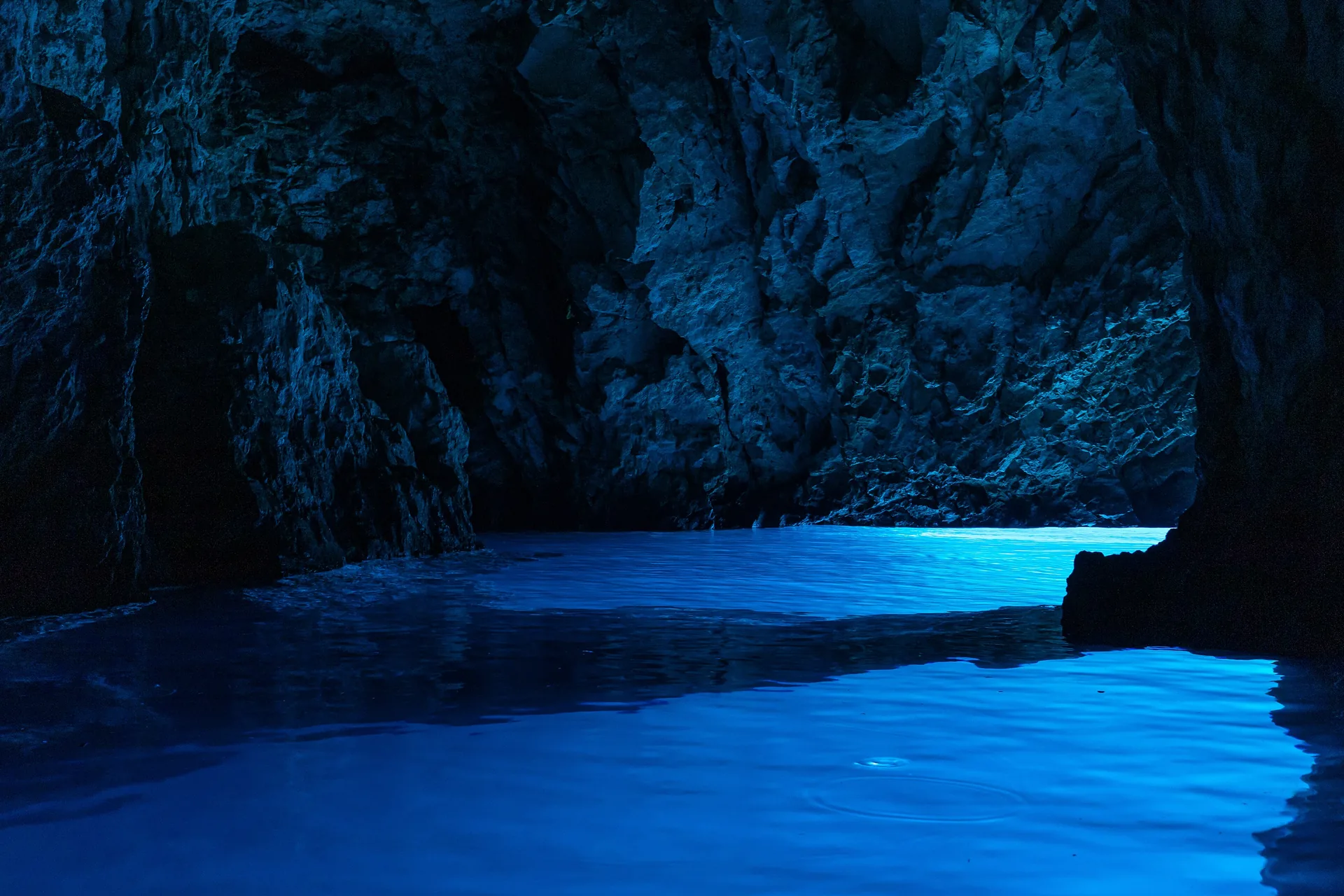
The Blue Cave, Biševo · Split, Croatia
A Cave That Lights Up From Below
For a few hours around midday, sunlight slips through a submerged opening on the island of Biševo, bounces off a white limestone floor, and floods a sea cave with electric blue light — glowing up, not down. Reaching it is the first stop on a five-island speedboat day from Split. Here's how the light works, what the other four stops are, and how to choose the right boat.
Light that comes up through the floor
Light that comes up through the floor
The glow is physics, not lighting
The Blue Cave — Modra špilja, on the tiny island of Biševo near Vis — has no lamps. Around late morning, sunlight enters through a second, submerged opening below the waterline, passes up through the clear sea, and reflects off a pale limestone floor. The water filters out the warm red end of the spectrum on the way, so what fills the chamber is a deep, luminous blue that seems to rise from beneath the boat rather than fall from above. Objects in the water can turn silver. It lasts only while the sun is high enough — which is exactly why the tour heads to Biševo first, before anything else.
An entrance opened with dynamite
For most of history the cave was reachable only by diving. Its blue-light effect was written up in 1884 by the Austrian painter Baron Eugen von Ransonet, and that same year a larger entrance was blasted into the rock so small boats could slip inside. That blasted opening is still the one you use — deliberately low, about a metre and a half high — and it is the reason the cave is so sensitive to the sea: what lets the boats in also lets the swell close it.
One cave, then four more islands
The Blue Cave is the headline, but it's the opening act of a longer day. From Biševo the speedboat runs on through the Vis archipelago — the collapsed-roof cove of Stiniva, the swim-in Green Cave on Ravnik, the shallow turquoise lagoon at Budikovac — and finishes with hours of free time in Hvar town, passing the pine-covered Pakleni islets on the way in. It is a full day on the water, fast-paced and salt-sprayed, built around one narrow window of light and four places you'd struggle to reach any other way.
The light window
The Blue Cave rewards good timing and punishes bad luck with the sea. Two things govern whether you see the glow — and neither is fully in the operator's hands.
Late morning is bluest
The blue-light effect peaks when the sun is high, roughly between 10:30 a.m. and 1 p.m. and most intense around 11 a.m. to noon, with calm seas. That single window is why the whole day is built back-to-front around it: the early Split departure and the long first crossing exist to put you at Biševo at the right hour, not because anyone wants a 7:30 start.
The sea decides, sometimes that morning
Because the entrance is only about a metre and a half high, even a modest southerly wind or swell can make it impassable — the cave can be closed on a sunny day, and the call is sometimes made only that morning by the local port authority. A good operator will tell you if the cave is doubtful, offer to rebook or refund, or run a modified route. If the cave is your whole reason for going, build in a spare day and pick a boat with a flexible cancellation policy.
The entry fee is separate and cash
The Blue Cave charges its own entrance fee — widely around €18 in the shoulder months and up to about €24 in high season — and it is almost always paid on the day at Biševo, separately from your tour, and often in cash. Factor it into your budget and carry euros; it is not usually bundled into the online tour price, and you'll also want cash for lunch in Hvar.
You don't swim in the Blue Cave
Swimming and diving are not allowed inside Modra špilja — you stay in the small transfer boat for the short circuit. The swimming happens elsewhere on the day: at the Green Cave on Ravnik, which you can sail into and swim in, and at the Budikovac lagoon. If you came hoping to float in glowing blue water, that's the Green Cave and the lagoon, not the Blue Cave itself.
The order of the day
A five-island speedboat day runs to a deliberate sequence, set by the Blue Cave's light and the open-water crossing. Here's how the hours fall, first stop to last.
- 01
Out to Biševo, first
The boats leave Split early — around 07:30 to 08:00 — because Biševo is a 1.5-to-2-hour run across open water, and the cave has to be reached while the midday light is working. It's the longest single leg of the day and can be the choppiest, so this is the stretch to take a seat toward the middle if you're prone to seasickness.
- 02
Into the Blue Cave
At Biševo you transfer from your tour speedboat into a small local boat that ferries eight to twelve people at a time through the low entrance for a short circuit inside — commonly five to ten minutes. You stay in the boat; there's no swimming in the cave. The entrance fee is paid here, separately, usually in cash. In peak season this transfer is where the day's one real queue forms.
- 03
Vis, Stiniva and the Green Cave
Back on the speedboat, the day works through the Vis islands: the fishing town of Komiža, the dramatic near-enclosed cove of Stiniva, and — sea and time permitting — the Green Cave on Ravnik, a sea cave lit through a hole in its ceiling where, unlike the Blue Cave, you can swim. Which of these you stop at, and for how long, shifts with the weather.
- 04
Budikovac, then Hvar
A swim stop at the shallow, glass-clear lagoon between the Budikovac islets breaks up the run north, and then the boat delivers you to Hvar town for the day's longest stop — several hours to find lunch, climb to the Fortica fortress or wander the old town — before the ride back to Split, often threading the Pakleni islands on the way.
Three blues, three places
Three blues, three different places
Blue Cave
Biševo
Blue light from a submerged opening, ~midday
Green Cave
Ravnik
Green light through a ceiling hole
Blue Lagoon
Budikovac
Shallow turquoise water over pale sand
The five stops
The five stops
A five-island day threads together five very different places. Here's what each one actually is.
The Blue Cave
The reason the day exists: a sea cave that glows electric blue around midday, entered by small local boat through a metre-and-a-half opening for a short circuit inside. No swimming, a separate cash fee, and a light effect that depends on sun and calm sea — the most magical and the most weather-dependent stop of the day.
Stiniva cove
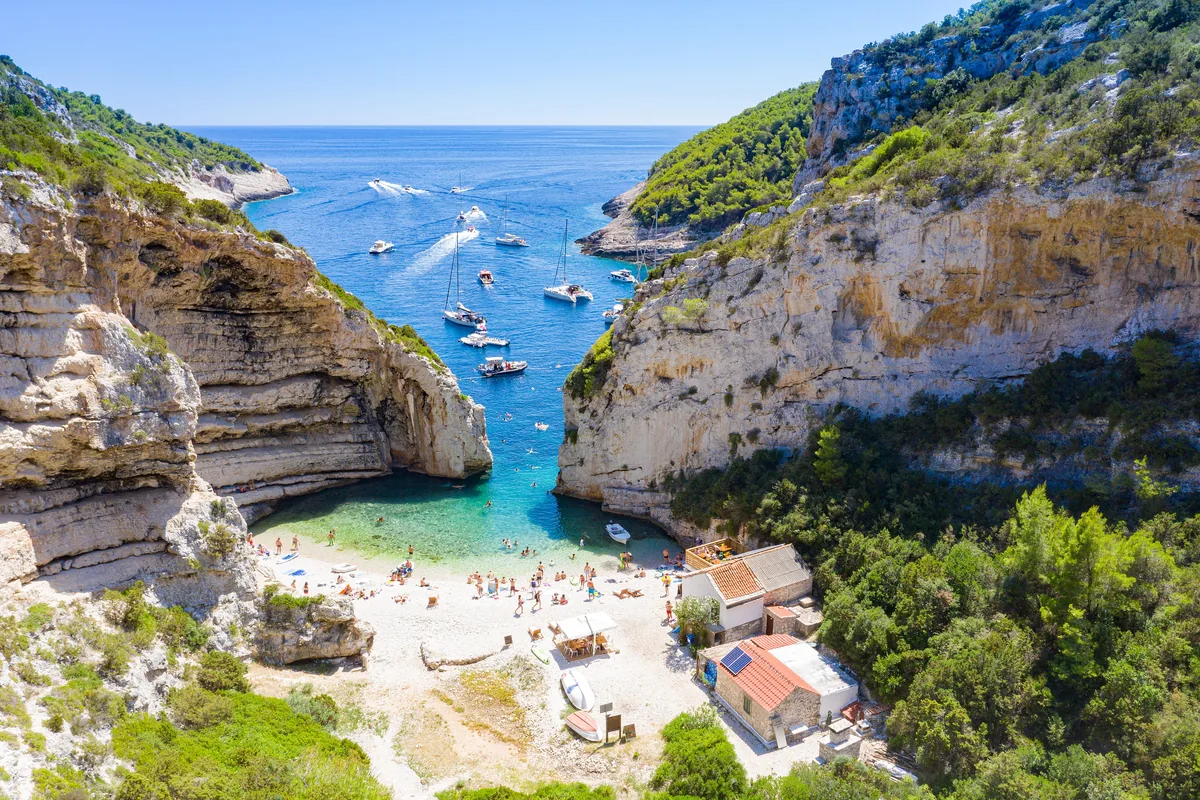
A near-circular cove on the south of Vis, all but sealed off by tall cliffs, reached through a gap in the rock only a few metres wide — a former cave whose roof collapsed. Voted Europe's best beach in 2016, it feels hidden even when you arrive by sea. (It's a beauty award, not a UNESCO listing.)
The Green Cave
The Blue Cave's more relaxed cousin: a sea cave on the islet of Ravnik with entrances big enough to sail into, lit through a hole in its ceiling that scatters an emerald-green glow through the water. Here you can swim and snorkel — the clear, green-lit water is one of the day's best swims, when sea and schedule allow it.
The blue lagoon
A shallow, sheltered turquoise lagoon between the Veliki and Mali Budikovac islets, with a pale sandy floor that throws the light back blue-green. Warm, calm and clear — often more than twenty metres of visibility — it's the day's easy swim stop, with a small seasonal restaurant on the island for those who want lunch on the water.
The town and the Pakleni islands
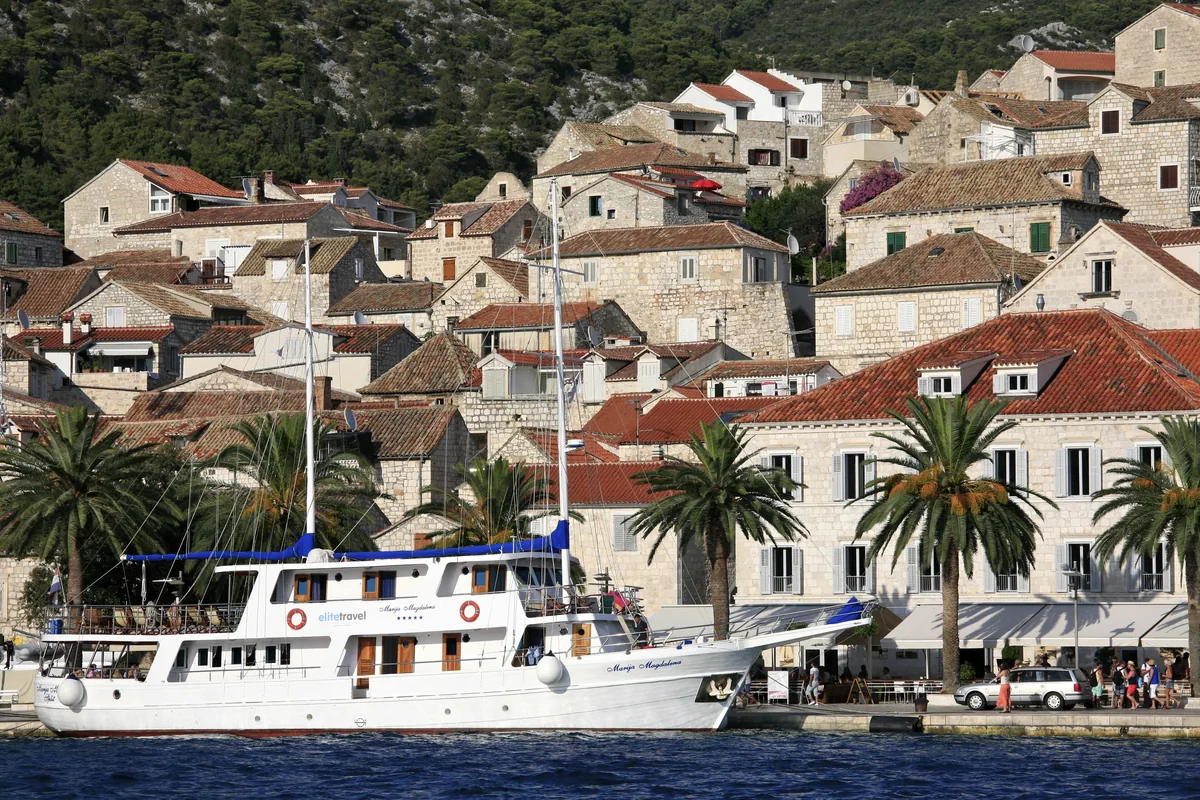
The day's longest stop and its only real town: Hvar, with its marble main square, the hilltop Fortica fortress looking down over the harbour, and hours of free time for lunch and wandering. The approach usually threads the Pakleni islands — a chain of pine-covered, largely car-free islets with some of the clearest water in Croatia.
Which boat is this?
Which boat is this?
Not every 'blue' Croatian boat trip is the same product, and the difference decides your whole day. Two distinctions catch people out.
The real Blue Cave trip
The tour on this page is the five-island speedboat day: Biševo's Blue Cave, Vis, the Green Cave, Budikovac and Hvar. It's a different, longer product from the popular 'Blue Lagoon' three-island trips, which are shorter, closer to Split, and do not include the Biševo Blue Cave at all. If you want the glowing cave, check the itinerary lists Biševo — a cheaper three-island 'blue lagoon' tour won't take you there.
Where it leaves from
The Blue Cave five-island trip runs from Split (some boats also pick up in Trogir), the natural base for Vis and Biševo. You cannot do the Biševo Blue Cave as a day trip from Dubrovnik — the islands are far to the north, and Dubrovnik's day boats visit an entirely different set (the Elaphiti islands, Mljet). If you're set on the Blue Cave, plan it from Split.
When to go
The five-island season is short, and the month you pick changes the crowds, the sea and your odds with the cave.
Late spring (May–Jun)
The Blue Cave season opens around April, but late spring is when it comes good: warm enough to swim, calm enough for reliable cave access, and far quieter than the summer peak. June in particular is a sweet spot — strong midday light, a warming sea and short queues at Biševo. Bring a light layer for the fast open-water crossing, which can be cool in the morning.
High summer (Jul–Aug)
The hottest, busiest and most reliable-sea months — but also when the Blue Cave queue is longest, as every boat in Dalmatia funnels through the same small entrance. Book a well-reviewed boat that leaves early, expect company at each stop, and accept that the trade for guaranteed swimming weather is sharing the islands. The sea is at its warmest and calmest for the swim stops.
Early autumn (Sep–Oct)
September is many people's favourite: the sea is still warm from summer, the light still high enough for the cave, and the crowds thinning by the week. Into October the season winds down, seas grow less predictable, and the cave closes more often — but a calm early-autumn day is about as good as the five-island trip gets.
Winter (Nov–Mar)
The five-island speedboat trips effectively stop for winter: the open crossing to Biševo is exposed and often rough, the Blue Cave is regularly closed, and the swim stops lose their point in a cold sea. If you're in Dalmatia off-season, treat the Blue Cave as a summer plan and come back for it — this is a warm-weather, calm-sea day by nature.
The five islands, in pictures
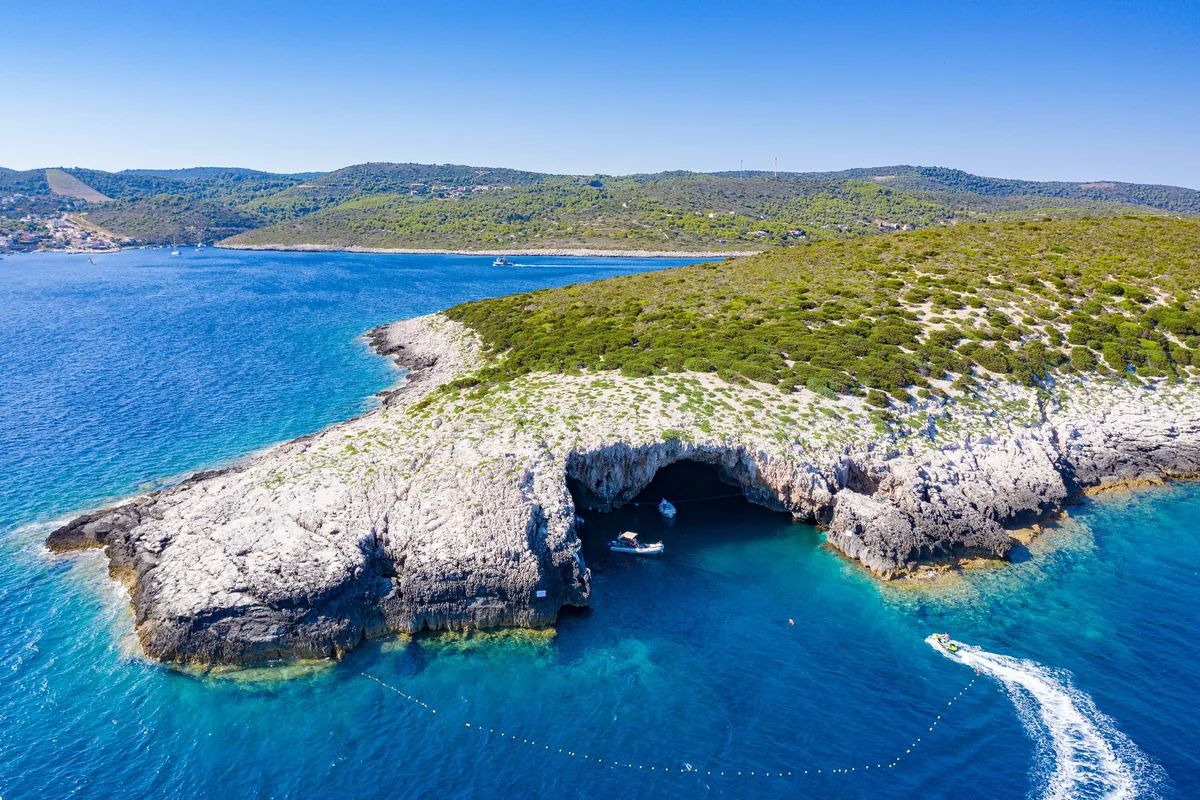
The blue-lit cave, the Green Cave's clear water, Stiniva's hidden cove and the islands off Hvar.
Planning your day on the water
Planning your day on the water
Check the itinerary says Biševo
Before you book, make sure the tour actually lists the Blue Cave on Biševo — not just a 'blue lagoon'. The five-island speedboat trips include Biševo; the shorter, cheaper three-island trips don't. Reading the stop list is the single best way to avoid booking the wrong boat and discovering there's no glowing cave in it.
Carry euros in cash
You'll need cash for two things the online price usually doesn't cover: the Blue Cave's own entrance fee (around €18–24, paid on the day at Biševo) and lunch, which isn't included and is bought during the free time in Hvar or at Budikovac. Bring more euros than you think you'll need — card isn't reliable on the small islands.
Dress for a fast open boat
This is an open or semi-covered speedboat, and the run to Biševo throws spray. Wear swimwear under your clothes, bring a quick-dry towel, a light windbreaker for the crossing, reef-safe sunscreen, a hat and sunglasses, and water shoes for the pebble beaches. A dry bag or waterproof phone case is worth having for the boarding and the swim stops.
Plan for seasickness and swimming
The open-water leg to Biševo can be choppy — if you're prone to motion sickness, take something about an hour before departure and sit toward the middle of the boat. And come ready to swim: the best moments at the Green Cave and the Budikovac lagoon are in the water, entered from the boat or off a pebble beach, so it's an active day rather than a sit-and-look one.
Give the cave a spare day
The one thing you can't control is whether the Blue Cave is open, and it closes on a meaningful share of days when the sea is up. If seeing the glow matters to you, don't book the trip for your last possible day — leave a spare, choose a boat with free cancellation, and you'll have a second chance if the first morning's sea says no.
Blue Cave & 5-island tours
Find a five-island day for your dates
Every tour below is bookable through GetYourGuide, with live availability and the final price shown in your own currency before you pay — the speedboat trips reach Biševo first, while the light is right, and carry you on through the other four islands.
Planning a Blue Cave trip
How the Blue Cave's Light Actually Works
Why Modra špilja glows electric blue from below, when it happens, and why the sea can switch it off.
Read more →THREE BLUESBlue Cave vs Green Cave vs Blue Lagoon
Three glowing places on the same day trip, constantly confused — which is which, and where you can actually swim.
Read more →THE DAYThe Five-Island Speedboat Day, Stop by Stop
What actually happens across ten hours on the water — the crossing, the cave, the swims and the free time in Hvar.
Read more →WHEN TO GOThe Best Time to Visit the Blue Cave
Why the season is short, when the sea behaves, and the months that balance the light, the crowds and the queues.
Read more →COME PREPAREDBlue Cave Tour: The Practical Details
Cash, seasickness, what to pack and how to avoid the small mistakes that take the shine off a big day on the water.
Read more →Questions
Blue Cave questions
Is the Blue Cave entrance fee included in the tour price?
Usually not. The Blue Cave charges its own entrance fee — around €18 in the shoulder months and up to about €24 in high season — and it's almost always paid separately on the day, at Biševo, often in cash. The online tour price covers the speedboat, skipper and the day's route; budget extra euros for the cave fee and for lunch, which also isn't included. Always check the specific listing's inclusions before you book.
What happens if the Blue Cave is closed because of the sea?
It can happen even on a sunny day: the cave's only entrance is about a metre and a half high, so mild swell or a southerly wind can make it impassable, and the call is sometimes made only that morning by the local port authority. A good operator will warn you if it's doubtful and offer to rebook, refund or run a modified route. Because it closes on a fair share of days, it's wise not to book the trip for your last day, to leave a spare, and to choose a boat with free cancellation.
Can I swim inside the Blue Cave?
No — swimming and diving aren't allowed inside Modra špilja. You stay in the small local boat for the short circuit through the glowing chamber. The swimming on this trip happens elsewhere: at the Green Cave on Ravnik, which you can sail into and swim in, and at the shallow turquoise lagoon at Budikovac. So you'll get plenty of time in clear water — just not in the Blue Cave itself.
Is this the same as a 'Blue Lagoon' tour?
No, and it's the most common mix-up. This is the five-island speedboat trip that includes the Blue Cave on Biševo. The 'Blue Lagoon' three-island tours are a different, shorter and cheaper product that stays closer to Split and does not visit Biševo or the Blue Cave at all. If you want the glowing cave, make sure the itinerary explicitly lists Biševo — a three-island blue-lagoon trip won't take you there.
Can I do the Blue Cave as a day trip from Dubrovnik?
Not really. The Blue Cave is on Biševo, near Vis, far to the north — the natural base is Split (some boats also depart Trogir). Dubrovnik's day boats visit a completely different set of islands, the Elaphiti and Mljet, and don't reach Biševo. If the Blue Cave is on your list, plan it from Split rather than expecting to fit it in from Dubrovnik.
What time of day is the cave bluest, and how long is the day?
The blue-light effect peaks when the sun is high — roughly 10:30 a.m. to 1 p.m., most intense around 11 a.m. to noon, on a calm sea. That's why the boats leave Split early, around 7:30 to 8:00, and run straight to Biševo first: the whole schedule is built to reach the cave in that window. The full day back to Split is about 10 to 11 hours, including the one-and-a-half to two-hour crossing each way.
Will I get seasick, and is it suitable for children?
The open-water crossing to Biševo can be choppy, so if you're prone to motion sickness take something about an hour before departure and sit toward the middle of the boat. It's an active day with several boat boardings and swim stops, which suits confident families well but is less ideal for those with limited mobility or nervous non-swimmers; life jackets are usually available. Minimum-age and infant policies vary by operator, so check the specific listing if you're travelling with small children.